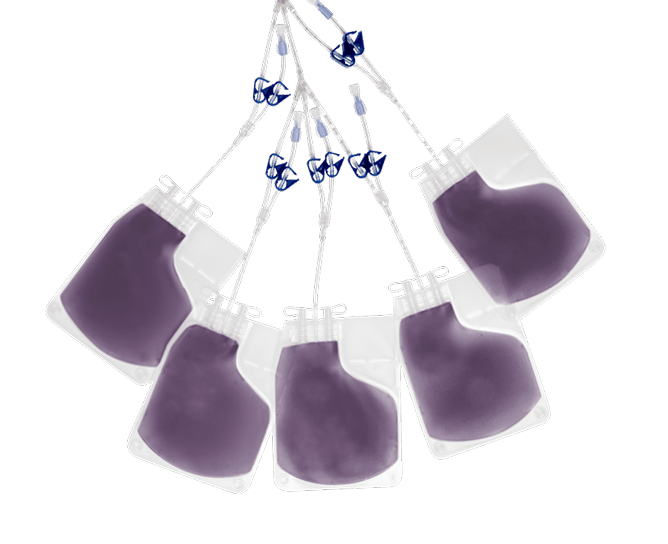

Medical textiles and polymers are critical components of implantable medical devices. Whether they’re designed for vascular or general surgery applications, implantable medical devices and delivery systems rely on many components that work together synchronously to enable and enhance patient quality of life. How do these biomaterials fit into the big picture?
Textiles have many diverse applications. They’re typically used as flexible scaffolds or structures for tissue in-growth and implant integration, conduits, or barriers for blood flow, and as a way to join materials and secure implants in the body. They’re also used for tissue reinforcement and wound support, joint support, and retrieving blood clots or preventing or reducing plaque debris in neurovascular applications. Polymers can be used to create coatings or laminates applied to textiles, or as thin films for sheaths used in device delivery systems. 
One of the biggest challenges medical device engineers face during the design phase is selecting the right materials and structures for a medical device, regardless of application. Ideally, device engineers should partner with a textile and polymer component supplier as soon as possible during the earliest stages of product development to optimize device design and avoid downstream biocompatibility issues. But how can a device manufacturer pinpoint the right biomaterials partner?
Solving Medical Device Challenges with Biomaterials
The ideal biomaterials partner is dedicated to finding textile and polymer solutions for medical devices. They don’t just see them as necessary components in a medical device—they see biomaterials as the solution to most device challenges, whether the final product is a left atrial appendage closure device, a surgical mesh, or a neurovascular flow diverter.
Because textile and polymer design is a very customized process, initial conversations should focus on the type of materials that would work best based on device requirements and end-use applications. Common questions that guide problem-solving for medical devices may include:
- Why will a braided textile work better for this application than a knit or woven textile?
- Does the textile need to be compressible and resilient? How thin or dense should a textile or polymer solution be?
- Why will a combination of two materials enable the desired functionality rather than just one (e.g., coated stents, laminated textiles)?
- Does the textile need to be constructed of loop pile fabric? Low-profile fabric? Or foam fabric?
True customization often begins after the prototyping stage. During the early design phase, suppliers can offer readily available samples and off-the-shelf fabrics and films to device engineers. This enables quicker proof-of-concept and prototyping, which ultimately accelerates the hand-off back to the engineering team, who will fine-tune and scale-up the approved textile and polymer component for the final device.
How Medical Textiles and Polymer-based Solutions Are Made
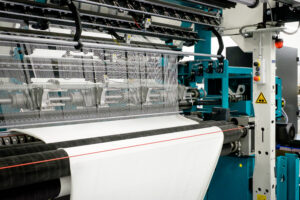
The three textile-forming technologies are braiding, knitting, and weaving, while film extrusion and dip technology are utilized in the development of polymer-based solutions. Each technology produces a variety of constructs that exhibit specific characteristics based on the end use of the device, such as flexibility, porosity, and thickness. Here’s how these technologies are typically leveraged to create implantable biomaterials, along with their core benefits:
- Braided components typically comprise sutures, tubular coverings, wire stents, or stent frames. They are ideal for covering complex structures on frames (e.g., tubes or dynamic shapes) and can be used for foreshortening and expansion, preventing metal exposure, or holding a valve in place against native tissue.
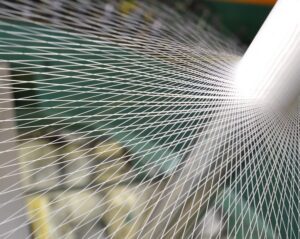
- Knitted components are typically soft and compressible. They provide robust flexibility, smooth conformability, and potential for 3D porosity, making them ideal for materials that need to stretch over or cover an anatomical structure. Knit fabrics can add loft to a surface and can be applied for integration and blood wicking.
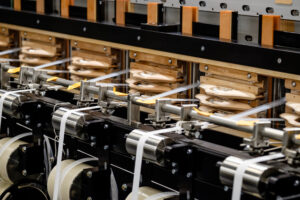
- Woven components are typically very thin, tight, and highly dense, and can be utilized to create complex, near-anatomical structures. The thinness of the material renders it packable within a catheter delivery system and makes it ideal for minimally invasive procedures. Woven textiles exhibit high permeability resistance without the bulk or elasticity of knit or braided materials, making them ideal blood conduits.
- Film extrusion is a process where raw plastic is melted and formed into a continuous profile to yield a sheet of film (cast film); melted and blown into a lay flat, 2D sheath (tubular extrusion); or when multiple layers of films and other materials are thermally heated to create a single sheet of film (lamination). Extruded films bring a multitude of beneficial properties and characteristics to your medical innovations, including flexibility, durability, smaller profiles, and biocompatibility.
- Dip coating and dip molding can be used to create thin-wall, seamless geometries and conformal coatings for complex components such as stents, balloons, and fabric braids. A scalable and repeatable way to coat materials, dip technology provides excellent properties and protection for devices depending on application and need.
Find Your Biomaterial Solution with a Dedicated Textile and Polymer Expert
With a concentrated focus on textile and polymer design and development, Solesis leverages decades of experience working with startups and global device manufacturers to guide raw material selection and design textile and polymer solutions that enhance next-generation implantable medical devices and delivery systems.
Medical device engineers who work with Solesis have direct access to experienced textile engineers, the latest technology and equipment, agile operations processes, robust supply chain agreements, and award-winning quality systems that all work together to streamline device development and ensure a high-performance solution—just like how the components of a medical device or delivery system work together to enhance patient quality of life.
Spark Your Next Innovation with Solesis
With decades of expertise in biomaterials science, Solesis can help you solve your toughest medical device and delivery system challenges with custom polymer and textile solutions. From material selection and early development through scale-up and commercialization, Solesis can help bring your next breakthrough in vascular, general surgery, biopharma, and performance materials to life.