Implantable medical textiles, originally used as sewing skirts for suturing valves in the heart during open-heart surgery, have been evolving since the industry transitioned from surgical valves to minimally invasive transcatheter devices. The ubiquity of minimally invasive heart procedures such as transcatheter aortic valve replacement (TAVR) has helped to demonstrate the versatility of implantable medical textiles.

The medical device industry has demanded thinner textile materials to ensure that implantable devices can better accommodate minimally invasive heart procedures. As such, raw materials have become more versatile to include smaller, finer denier yarns and new, texturized materials, along with polymer-based solutions such as films or coatings. This flexibility enables medical device and delivery system components to be modified in countless ways to enhance the functionality of cardiovascular devices.
To ensure cardiovascular medical devices and delivery systems include the right materials, device designers can work with an expert biomaterials partner to understand how different fabrics and polymers work, including the functional differences between braided, knit, and woven textiles, and how films or coatings can be integrated to complement or enhance performance. An expert partner who is dedicated to designing and manufacturing biomaterials such as textiles and polymers — and who understands the applications of cardiovascular devices — can help organizations leverage the benefits of each solutions-enabling technology, whether applied to a novel device or modifying or improving a predicate device.
Biomaterial Use in Cardiovascular Devices
In cardiovascular devices, textiles are used in three ways: 1) as flexible scaffolds for tissue in-growth and implant integration; 2) as conduits or barriers for blood flow; 3) and to join materials and secure implants in the body. Device makers often integrate different types of textile structures within a single device, functionalizing each textile to fit the device requirements to provide the prescribed benefits. Polymers can be formulated as coatings for stents or extruded as thin films for catheter delivery systems that rely on polymer-based sheaths or balloons.
Three key textile-forming technologies exist to serve these applications: braiding, knitting, and weaving. Each has its own benefits:
- Braiding is used to make sutures, tubular coverings, wire stents, or stent frames. Braided textiles are ideal for covering complex structures on frames (e.g., tubes or dynamic shapes). They can be used for foreshortening and expansion, to prevent metal exposure, and/or to hold a valve in place against native tissue. Like all textiles, braided structures help provide tissue in-growth activities due to their fibrous nature. Accordingly, braided structures are used in many structural heart devices, including clipping and heart valve solutions, devices for replacement or repair, and bypass grafts.
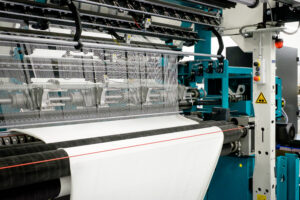
- Knitting provides robust flexibility, smooth conformability, and potential for 3D porosity, making this textile-forming technology ideal for materials that need to stretch over or cover something (e.g., 3D device designs). They also have thermoforming capabilities. The porosity of knit materials is controllable, which aids tissue integration. Thicker than woven fabrics, knit fabrics can add loft to a surface and can be applied for integration, blood wicking, and sealing. Knit materials have traditionally been used in surgical open-heart valve procedures. In tubular configurations, they’re used in left atrial appendage occlusion (LAAO) devices, leaflet clipping products, and patent foramen ovale (PFO)/atrial septal defect devices.
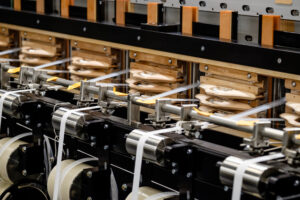
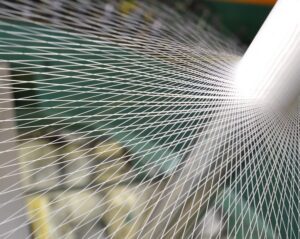
- Weaving creates thin, highly dense material that can be utilized to create complex, near-anatomical structures. The thinness of the material renders it packable within a catheter delivery system and, when unfurled, it retains the shape intended by the device manufacturer when built in conjunction with wire-frame forms—specifically nitinol, which has shape memory properties—and sutures. Thus, woven materials are not constrained to their original geometry when passing through a catheter for delivery to the heart, abdomen, or other locations within the body. Moreover, woven textiles exhibit high permeability resistance without the bulk or elasticity of knit or braided materials, making them ideal as blood conduits. Woven materials are considered the gold standard for heart valve skirts and AAA grafts.

- Film extrusion is a process where raw plastic is melted and formed into a continuous profile to yield a sheet of film (cast film); melted and blown into a lay flat, 2D sheath (tubular extrusion); or when multiple layers of films and other materials are thermally heated to create a single sheet of film (lamination). Extruded films bring a multitude of beneficial properties and characteristics to your medical innovations, including flexibility, durability, smaller profiles, and biocompatibility.
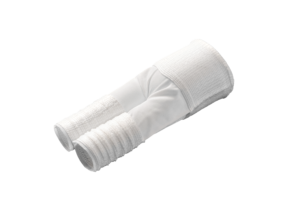
Dip coating and dip molding can be used to create thin-wall, seamless geometries and conformal coatings for complex components such as stents, balloons, and fabric braids. A scalable and repeatable way to coat materials, dip technology provides excellent properties and protection for devices depending on application and need.
Next-Generation Textile Creation and Use
While the base technology for creating braided, knit, or woven textiles hasn’t changed much over the years, the implantable medical device industry constantly pushes textile technology to be more efficient, automated, and precise to better serve next generation needs. Consider that, moving forward, composite or surface-modified structures – textile and polymer-based – could potentially address biological issues in the cardiovascular space such as thrombosis and durability in the following ways:
Composites
- Composite-based materials (e.g., fabric-to-film) could replace biologics through biomimetic design capabilities.
Scaffolds and Tissue Engineering/Regeneration
- High-surface area nanofiber electrospinning can be used to make resorbable materials act as tissue scaffolds for endogenous tissue regeneration, potentially providing an improved nanofiber surface to facilitate tissue growth.
- Textiles can be used as scaffolding for tissue engineering or fully integrated heart valve structures.
Coatings
- Non-resorbable and resorbable polymers — including polyglycerol sebacate (PGS) and polyglycerol sebacate urethane (PGSU) leaflets, used in conjunction with textiles to optimize their mechanical properties — may represent the future of fully synthetic heart valve developments.
Evolving Textile Solutions for Evolving Medical Device Demands
Demand for minimally invasive heart procedures continues to accelerate, driven by TAVR’s position as the gold standard for treating severe aortic stenosis, as well as by the push to replicate its success in mitral and tricuspid interventions. This has directly impacted the need for device and delivery system material innovations. Issues associated with durability, thrombosis, and other biologically based complications must be considered when designing devices for these patient populations.
The approval of next-generation devices for broader indications, especially within the mitral and tricuspid domains—where device availability and indications have historically been restricted—is enabling minimally invasive treatment for a larger patient population.
As medical devices evolve, medical textile and polymer technology must also evolve with industry demands. Therefore, new technologies and fabric and polymer modifications for skirts, frames, or films, for example, should be developed to meet both well-understood and emerging needs in the cardiovascular device space.
Medical device and delivery system manufacturers can meet those emerging needs and create new heart valve devices — and improve upon existing products — by engaging with the knowledge and expertise of a world-class biomaterials designer. With an expert by their side from sketch to scale, manufacturers can move quickly by using optimized raw materials that are chosen early in the design process, leveraging readily available fabric and film samples, and working closely with a team of textile and biomaterials engineers to guide the design and manufacture of custom components for their next cardiovascular device innovation.
Spark Your Next Innovation with Solesis
With decades of expertise in biomaterials science, Solesis can help you solve your toughest medical device and delivery system challenges with custom polymer and textile solutions. From material selection and early development through scale-up and commercialization, Solesis can help bring your next breakthrough in vascular, general surgery, biopharma, and performance materials to life.