
Implantable vascular and general surgery medical device manufacturers face pressure to innovate quickly and cost-effectively to better serve patients. However, the journey from concept to market is often fraught with challenges, from extended development times to high costs – regardless of whether a device manufacturer is a global OEM or a start-up company. Off-the-shelf (OTS) fabrics and films as medical device component solutions offer manufacturers flexibility for meeting these demands, providing ready-to-use, high-quality materials to streamline the design process and expedite time to market. The result? Medical device manufacturers can focus more on innovation and less on sourcing and validating materials. Continue reading as we explore the full benefits of OTS fabrics and films, including how they accelerate the path from concept to commercialization, as well as three specific textile advancements for implantable devices.
Understanding Your Textile Needs: The Role of Off-the-shelf Fabrics in Medical Device Design
Each medical device has unique specifications that must be met to ensure optimal performance, safety, and efficacy. Historically, there has been a wide range of long-accepted textile materials – which can be modified with polymer-based materials such as films and coatings – that serve as the foundation for implantable devices. Today, textile and polymer innovation builds upon this foundation by enhancing these properties to meet evolving industry expectations. An experienced textile and polymer supplier partner understands these requirements and can provide materials and advanced solutions specifically engineered to meet the exact needs of each device. This includes offering insights into the most appropriate materials for different applications, assisting with key documents required for regulatory compliance, and providing custom solutions that can enhance the performance of a device with various properties and characteristics, including:
- 3D dimensionality
- Compactibility
- Conformability
- Cushioning (e.g., covering/protection)
- Durability
- Flexibility
- High density
- High-surface area
- Low profile
- Permeability
- Sealing
- Suturability
- Thickness
- Tissue in-growth
Additionally, these suppliers often have the infrastructure to support both off-the-shelf and custom textile and polymer solutions, ensuring that manufacturers can get the materials they need when they need them.
Beyond Off-the-shelf: Why an Experienced Biomaterials Supplier Is Essential
Medical device manufacturers should seek out a supplier that has experience designing and manufacturing medical textiles and polymers built to provide specific functional properties and characteristics like the ones mentioned above for applications in various therapeutic areas. Not only should they provide high-quality materials and advanced solutions that meet stringent medical standards, but they also need to offer the flexibility to adapt to changing needs throughout the development process. Ultimately, a textile and polymer-based component supplier that provides off-the-shelf materials can help device manufacturers achieve three critical goals throughout the device design, development, and commercialization processes:
1. Speed to Market
As mentioned earlier, one of the primary advantages of working with an experienced supplier who provides OTS fabrics and films is their ability to significantly expedite lead time. Since OTS materials are readily available based on market needs, device manufacturers can more quickly navigate the prototyping phase and address critical issues early on.
2. Cost-effectiveness
Off-the-shelf textile and film options can also lead to substantial cost savings. By leveraging pre-engineered materials, manufacturers can bypass the costly and time-consuming process of developing initial custom fabrics and films, which enables them to build a more solid foundation before engaging in the iterative process of fine-tuning solutions based on specific device requirements. This reduces initial development costs and allows for more predictable budgeting throughout the project lifecycle. It also enables manufacturers to allocate more resources toward innovation and other critical areas of development.
3. Quality and Consistency
Consistent quality and performance are vital in the medical device industry, where patient safety and device efficacy are paramount. OTS fabrics and films from experienced partner suppliers are rigorously tested to ensure they can meet biocompatibility requirements and perform across all applications.
This consistency minimizes the risk of defects and variability, which can lead to costly recalls and regulatory issues that can impact patient care. By providing materials that meet these high standards, a trusted textile and film supplier ensures that medical devices maintain their integrity and effectiveness throughout their lifecycle, ultimately enhancing patient outcomes and manufacturer reputation.
What are the Applications for Off-the-shelf Biomaterials in Medical Device Design?
Solesis’ textile-forming and film extrusion capabilities, combined with decades of experience from solving medical device challenges with biomaterials, continue to enable device manufacturers to bring their life-saving innovations to market. Three of Solesis’ latest OTS fabrics – woven low denier per filament (LDPF), woven ribbon, and foam knit materials – are three advancements in textile innovations. These textile options – which are based on existing, commonly used materials and can be augmented with polymer-based solutions such as coatings and films – offer promising solutions that are designed to accommodate the nuances of device delivery systems (e.g., catheter-based balloon system) or frames and enhance the function and performance of implantable medical innovations to better meet common but unmet patient needs. Some of these fabrics are: woven low denier per filament, woven ribbon, and foam knit.
Woven Low Denier Per Filament (LDPF)
High water permeability in some textiles can compromise the performance and reliability of medical devices. Therefore, manufacturers continually call for thinner, tighter structures that exhibit low water permeability while maintaining maximum density and coverage. To address this, Solesis developed a multifilament yarn to create thin fabrics with low permeability. This yarn provides a high surface area without significantly impacting the thickness or suture retention of the fabric. Starting from raw material selection, Solesis’ extrusion team created a novel yarn derived from microfibers. The resulting woven LDPF fabric offers improved tissue integration,
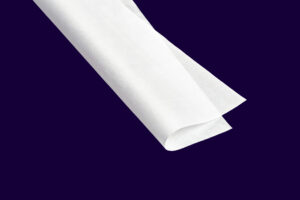
flexibility, and suturability. This makes it ideal for medical devices requiring low-profile materials that exhibit high-density and low-permeability characteristics, such as heart valve skirts and stent grafts.
This consistency minimizes the risk of defects and variability, which can lead to costly recalls and regulatory issues that can impact patient care. By providing materials that meet these high standards, a trusted textile and film supplier ensures that medical devices maintain their integrity and effectiveness throughout their lifecycle, ultimately enhancing patient outcomes and manufacturer reputation.
Woven Ribbon
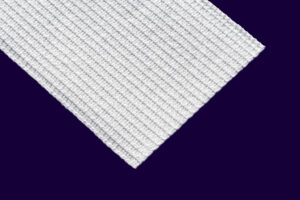
Existing woven ribbons often suffer from limited stretch, hindering the flexibility and functionality of frames for implantable medical devices. Manufacturers need fabrics that provide higher axial and radial stretch while also maintaining low water permeability and suturability, specifically for heart valve skirts and stent graft components. Solesis has addressed this challenge by creating a fabric with higher stretch compared to standard options by altering the structure of the pattern used to construct the fabric. This enables the fabric to exhibit a wider range of stretch, which enhances its compactibility and expansion capabilities.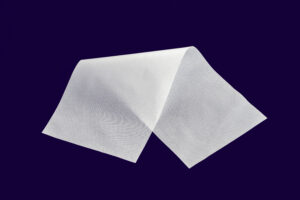
Foam Knit
Traditional foam materials – often made of polyurethane (PU) – used in medical devices often lack structural integrity. Additionally, they can pose quality or regulatory issues due to a higher potential for extractables and leachables because they are more likely to shed loose fibers during the manufacturing process. This creates particulates that can impact the overall quality and safety of the device and lead to product development delays, or even cause patient harm if they’re not caught early during the early stages of development.
To address this issue, Solesis developed two loop pile knit materials – one thick and one thin – that mimic the
compressibility properties of foam. With high compressibility as well as high surface area, foam knit fabrics are ideal for use as sealing materials in cardiovascular applications. They also provide excellent puncture resistance and protect patients by covering sharp struts and other structural elements that could pose a risk to surrounding tissue.
Learn More About Solesis’ Medical Device Biomaterials Solutions
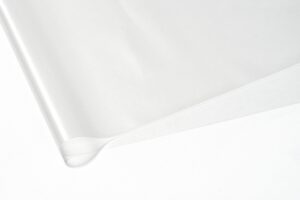
Off-the-shelf fabric and film solutions offer manufacturers a unique combination of quality, consistency, and flexibility backed by decades of textile and polymer expertise. Solesis’ advanced solutions are proactively built to meet stringent medical standards, ensuring consistent quality and performance. And with reliable materials readily available, manufacturers can not only accelerate development processes but also reduce the need for costly, time-consuming custom prototyping and development. This level of support helps manufacturers streamline the device development process, reducing time to market so they can prioritize delivering high-quality medical device innovations to patients faster.
Explore Off-the-shelf Options <link to Off-the-shelf page>
Spark Your Next Innovation with Solesis
With decades of expertise in biomaterials science, Solesis can help you solve your toughest medical device and delivery system challenges with custom polymer and textile solutions. From material selection and early development through scale-up and commercialization, Solesis can help bring your next breakthrough in vascular, general surgery, biopharma, and performance materials to life.