
Medical device design starts at raw material selection. However, medical device and delivery system manufacturers often need foundational guidance about medical device textiles and polymers — how they’re made, how they function inside a device, and how to choose the right materials based on application. Different considerations often apply to raw material selection, prototyping, and scale-up, and medical device manufacturers can be at a loss for where to start. Therefore, they are well-served by securing the guidance of a medical component partner — ideally, a supplier who is dedicated to customizing textiles and polymers.

Medical device and delivery system manufacturers know from a high level that they need fabrics or polymers for their devices. But inexperience, often coupled with a lack of understanding about how the material selection process works, can slow decision-making and impact project timelines. Additionally, device manufacturers — despite being experts in their device and its functionality — may not always immediately grasp the nuances of how different materials perform within the context of different applications in a way that ensures optimal benefit to patients.
A biomaterial expert’s specialized focus on textiles and polymers streamlines product development. The ideal partner supplier has been entrenched in the process for decades, offering fundamental knowledge of the product lifecycle from relationship-building at the prototyping stage and material selection to polymer science and finished textile components for small runs or scaling up for commercialization.
While some textile and polymer component suppliers may bog down initial discussions by sidetracking customers about stent or catheter design, a supplier dedicated to textiles and polymers keeps the discussion focused on what is necessary to provide a customer with the best material for their device, whether it’s for a vascular, general surgery, neurovascular application. Organizations with bundled services can slow product development and necessitate the completion of numerous partnership agreements before textile or polymer design can begin in earnest.
The medical device engineer’s goal is the same as that of the biomaterials-focused supplier: a quick project start that concentrates on textiles and polymers. To this end, the expert supplier has readily available samples and off-the-shelf (OTS) fabrics and films <link to OTS page> for customer consideration and offers next-day quotes for small runs.
An Applied Biomaterial Solution for Every Challenge
Solesis continuously identifies challenges associated with implantable medical devices and delivery systems and develops solutions guided by the flexible nature of textiles and polymers. This is accomplished by monitoring the market via customer projects and interactions, staying informed on market trends, and constantly striving for new knowledge to enhance medical devices with our custom services and capabilities. A focus on textiles and polymers ensures we approach every medical device problem with a biomaterial solution, which fosters innovation. 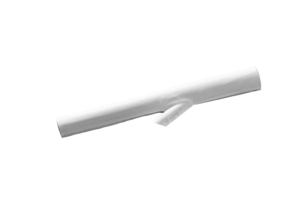
Informed by more than 80 years of experience in providing textile- and polymer-based solutions, Solesis can give customers confidence in material selection and utilization during the early stages of product development, enabling customers to focus on other activities such as prepping for clinical trials. With experience-based insight, Solesis is innately proactive in identifying device design or performance challenges before they arise or as they occur, without the need for a direct request from the customer. Streamlining these early steps accelerates discussions, which can set the stage for a valuable solutions-based relationship.
Early Value is Everything
Material selection can be a big pain point for medical device and delivery system manufacturers. An expert textile and polymer partner establishes its value early in a partnership by streamlining this complex process. Solesis has provided biomaterials for countless medical devices that use textiles and polymer-based solutions. As a result, our capabilities are derived from decades’ worth of textile designs—many of which have become the industry standard—and polymer formulations. Moreover, this allows us to offer many viable OTS fabrics and films and custom-engineered solutions to meet specific device applications. 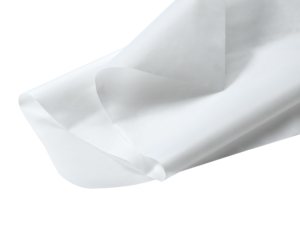
Translating customer needs internally must happen quickly to provide value. The ideal biomaterials partner facilitates that urgency with technical teams that are equal in their knowledge of textiles, polymers, and in-house capabilities: design and development, prototyping, core competencies (e.g., braiding, knitting, weaving; film extrusion, dip coating, dip molding, solutions and adhesives formulation), and post-processing techniques, for example <link to 2.1.5 Forming Processing Techniques>. This expertise extends to predicate devices and components, powered by access to operational staff trained on specific equipment and work within standard operations.
In addition to simplifying the textile- and polymer-selection process — from raw material selection and design (e.g., building in application-specific characteristics such as pick density, permeability, thickness, and durability) to prototyping and finishing — an expert in textiles and polymers strives to provide transparency in all operations. Customers may come into the process “blind,” but once they see CAD and SEM assets during development — and eventually prototype iterations — they are able to better understand the value of working directly with an expert biomaterials partner. In other words, the work speaks for itself.
Final Thoughts
While identifying, sourcing, and implementing appropriate textiles and polymers for a medical device and delivery system may initially seem stressful and likely to delay development timelines, a biomaterials expert can alleviate all these concerns by streamlining the process with high transparency and an educational touch, from selecting raw materials and prototyping to scale-up. Manufacturers who work with a supplier partner who is dedicated to designing, modifying, and manufacturing medical textiles and polymers can confidently make decisions that keep projects on track for launch.
Spark Your Next-generation Innovation with Solesis
With decades of expertise in biomaterials science, Solesis can help you solve your toughest medical device and delivery system challenges with custom polymer and textile solutions. From material selection and early development through scale-up and commercialization, Solesis can help bring your next breakthrough in vascular, general surgery, biopharma, and performance materials to life.